
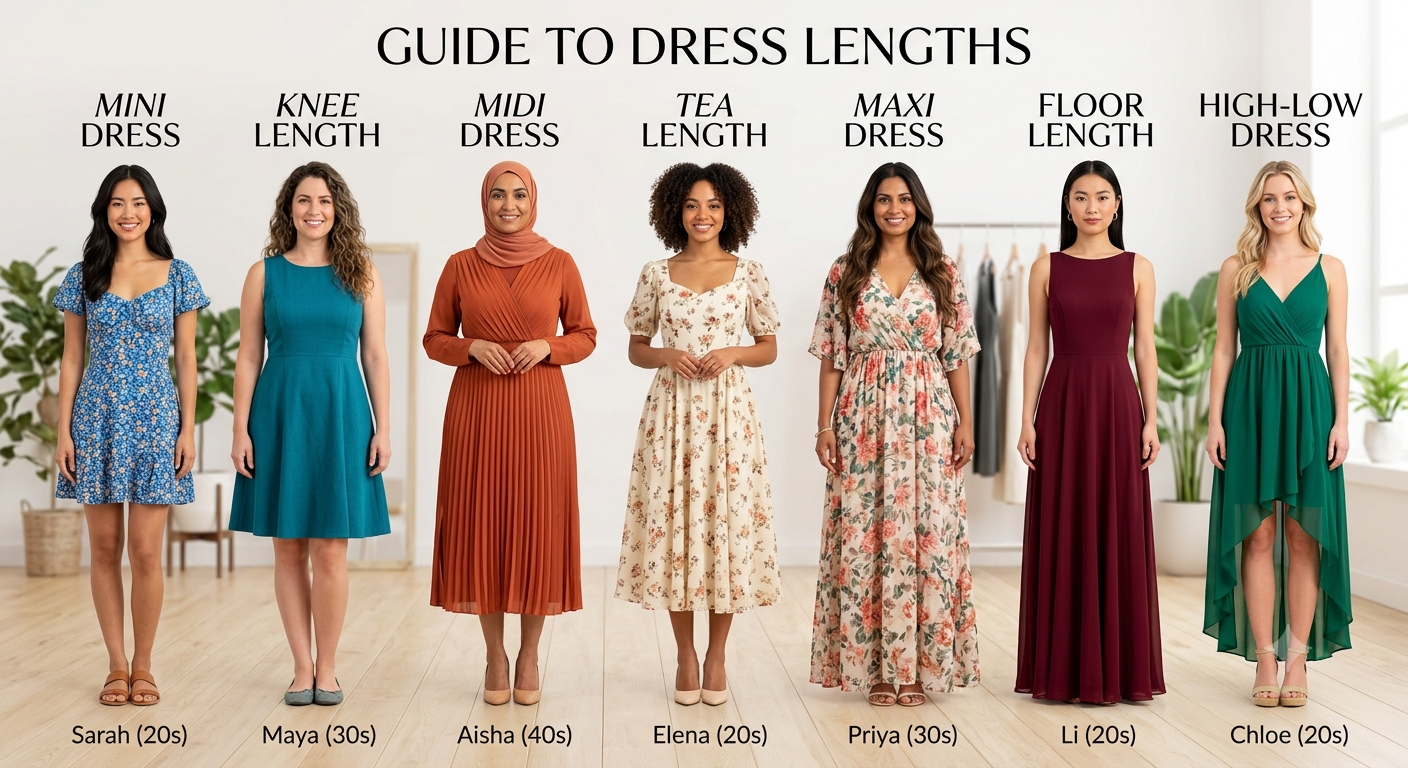
Choosing a dress seems simple until you realize that the length can completely change the look, comfort, and purpose of an outfit. Two dresses made from the same fabric and featuring the same design can feel entirely different simply because one falls above the knee while the other reaches the floor.
That is why dress lengths remain one of the most searched fashion topics online. People want to understand which styles suit different occasions, body shapes, seasons, and trends without relying entirely on fashion rules that often feel outdated.
Whether you’re shopping online, preparing for a wedding, attending a business event, or simply updating your wardrobe, understanding the different lengths helps you make smarter choices. It also reduces the chances of buying something that looks great on the model but doesn’t fit your lifestyle.
This article explores the different dress lengths, how they evolved, when they work best, common misconceptions, styling considerations, and the practical reasons they continue to matter today.
Quick Answer: What Are Dress Lengths?
Dress lengths refer to how far a dress extends down the body, usually measured from the shoulder to the hemline. Common categories include mini, above-the-knee, knee-length, midi, tea-length, ankle-length, and maxi or floor-length dresses.
The ideal choice depends on factors such as:
- The occasion
- Personal comfort
- Body proportions
- Climate
- Footwear
- Current fashion preferences
There is no universally “correct” length. The best option is simply the one that fits both your style and your needs.
Why the Hemline Says More Than Most People Realize
A dress length influences much more than appearance.
It changes how formal an outfit feels, how easy it is to move, and even how confident the wearer may feel throughout the day.
For example, someone attending a corporate conference might naturally reach for a knee-length sheath dress because it balances professionalism with comfort. That same person may choose a flowing maxi dress for a beach vacation without thinking twice.
Fashion experts often discuss color, fabric, and silhouette, but the hemline quietly shapes first impressions just as much.
Interestingly, many people discover this only after wearing a dress that felt perfect in the fitting room but impractical during an entire day of walking, sitting, or climbing stairs.
A Look at the Most Common Dress Length Categories
Although fashion constantly evolves, most dresses fall into several widely recognized categories.
Mini
Mini dresses generally end high above the knee.
Popular since the 1960s, they continue to represent youthful, energetic fashion. They are common for parties, casual outings, concerts, vacations, and warm weather.
Many people appreciate the freedom of movement, although others may find them less suitable for professional or formal settings.
Above-the-Knee
This slightly longer option provides a balance between playful and practical.
Many casual dresses, office styles, and daytime event outfits fall into this category because they work well across multiple occasions.
It is one of the most versatile lengths available.
Knee-Length
Knee-length dresses have remained fashionable for decades.
They often appear in:
- Business attire
- Cocktail events
- Church services
- Graduation ceremonies
- Interviews
The balanced proportions make them suitable for a wide variety of body types.
Midi
Midi dresses typically fall between the knee and the ankle, often ending around the mid-calf.
Over the past several years, this length has become one of fashion’s strongest trends.
Designers appreciate its elegance, while everyday shoppers enjoy the flexibility it offers.
Depending on styling, a midi dress can feel minimalist, vintage, modern, or luxurious.
Tea-Length
Tea-length dresses usually stop between the calf and ankle.
Originally associated with elegant afternoon gatherings, they have become increasingly popular for:
- Bridal events
- Garden weddings
- Vintage-inspired fashion
- Semi-formal occasions
Many people love the graceful movement created by this length.
Maxi
A maxi dress generally reaches the ankles.
These dresses combine comfort with elegance, making them ideal for vacations, weekend outings, casual dinners, and summer events.
Lightweight fabrics often enhance their relaxed appearance.
Floor-Length
Floor-length gowns extend to the ground.
These are commonly chosen for:
- Black-tie events
- Galas
- Weddings
- Award ceremonies
- Formal celebrations
Long gowns often create a dramatic silhouette while emphasizing sophistication.
Why Measurements Can Be Confusing
One challenge many shoppers encounter is the lack of universal sizing standards.
A “midi” dress from one brand may fall below the calf, while another brand’s version stops just under the knee.
Several factors affect where the hemline actually lands:
- Height
- Torso length
- Leg proportions
- Shoe height
- Brand sizing
- Dress design
Someone who is 5’2″ may find that a supposed midi dress appears almost ankle-length, while the same garment looks noticeably shorter on someone who is 5’10”.
This explains why online reviews frequently mention unexpected dress lengths.
Why Online Shopping Makes Length More Important Than Ever
Shopping online has changed how people evaluate clothing.
Without trying garments on first, buyers rely heavily on:
- Product measurements
- Customer photos
- Height references
- Size charts
- Video demonstrations
Many experienced shoppers check the model’s height before purchasing.
That simple detail often provides a better understanding than product descriptions alone.
The Small Details That Change the Entire Look
Length rarely works alone.
Several other design elements influence how a dress appears.
Fabric plays a surprisingly large role. Soft chiffon creates flowing movement, while structured cotton or satin produces a sharper silhouette.
Sleeves also matter.
A sleeveless maxi feels relaxed and vacation-ready.
Long sleeves combined with the same length instantly create a more formal appearance.
Shoes change visual proportions too.
Heels can make a midi appear shorter while flats may emphasize its full length.
Accessories complete the picture without competing against the dress itself.
Fashion Rules Have Become Far More Flexible
Older style advice often promoted strict guidelines.
People frequently heard statements like:
- Petite women should avoid long dresses.
- Tall women shouldn’t wear minis.
- Older women should choose longer hemlines.
Modern fashion largely rejects these blanket rules.
Instead, stylists focus on balance, confidence, and personal preference.
Someone petite can absolutely wear a floor-length gown if the proportions work well.
Likewise, taller individuals regularly wear shorter dresses with excellent results.
Fashion today celebrates individuality much more than rigid standards.
What People Usually Notice After Wearing Different Lengths
One interesting observation is how quickly comfort becomes more important than appearance.
Many shoppers initially focus on how attractive a dress looks.
After wearing it for several hours, practical considerations become far more noticeable.
People often comment on:
- Ease of walking
- Sitting comfortably
- Climbing stairs
- Wind outdoors
- Temperature
- Wrinkle resistance
A beautiful gown may become frustrating if constant adjustments are necessary throughout the day.
These everyday experiences rarely appear in advertisements but significantly affect satisfaction.
Where Formal Dress Codes Make Length Matter
Certain occasions naturally influence appropriate dress choices.
Professional workplaces generally favor knee-length or midi options because they balance style with professionalism.
Wedding guests often choose midi, tea-length, or maxi dresses depending on the invitation.
Cocktail parties commonly feature shorter elegant dresses.
Black-tie events almost always encourage floor-length gowns.
Casual settings provide the greatest flexibility, allowing nearly every length depending on personal style.
Understanding these expectations helps avoid feeling either underdressed or overdressed.
The Reality Behind Seasonal Choices
Weather influences dress selection more than fashion trends alone.
Summer encourages lighter fabrics across almost every length.
Long dresses remain surprisingly comfortable when made from breathable cotton or linen.
Winter wardrobes often include knit midi dresses paired with boots and coats.
Spring introduces floral patterns across nearly every hemline.
Autumn frequently favors richer colors and layered styling.
Rather than replacing entire wardrobes every season, many people simply adapt accessories and outerwear.
Why Personal Proportions Matter More Than Height
Many shoppers assume height alone determines the ideal hemline.
In reality, body proportions usually have greater influence.
Two individuals with identical heights may wear the same dress quite differently because of variations in leg length or torso proportions.
Tailoring also changes everything.
A simple hem adjustment can transform an average-looking dress into one that feels custom-made.
Professional alterations are often less expensive than repeatedly purchasing dresses that never fit quite right.
The Questions Many First-Time Buyers Ask
Which dress length is considered the most versatile?
Most stylists consider knee-length and midi dresses the easiest to wear because they transition well between casual and formal occasions.
Is a maxi dress always formal?
No.
Many maxi dresses are designed specifically for casual wear using lightweight fabrics, simple prints, and relaxed silhouettes.
Common Misunderstandings That Still Persist
Several myths continue circulating despite changing fashion trends.
One common misconception suggests shorter dresses automatically appear younger.
Age rarely determines whether a dress works well.
Fit, styling, confidence, and occasion matter much more.
Another myth claims longer dresses always look more elegant.
While they certainly can, elegance depends equally on tailoring, fabric quality, and thoughtful styling.
Some also believe every wardrobe requires one of every length.
Most people naturally gravitate toward two or three favorites that fit their lifestyle best.
That approach is perfectly reasonable.
Safety and Practical Considerations That Often Get Ignored
Although fashion focuses on appearance, practicality deserves attention too.
Very long dresses can create tripping hazards on uneven ground.
High heels combined with floor-length gowns require extra care when climbing stairs.
Extremely short dresses may become uncomfortable during active events or windy weather.
Outdoor weddings sometimes present unexpected challenges with grass, gravel, or sand.
These concerns don’t mean avoiding certain styles.
They simply encourage thoughtful planning based on the setting.
Are Dress Lengths Still Relevant in Modern Fashion?
Absolutely.
Fashion trends change every season, but hemline choices remain central to clothing design.
Designers continually reinterpret classic lengths using modern fabrics, updated silhouettes, and contemporary styling.
Social media has also expanded appreciation for diverse fashion preferences.
People now draw inspiration from influencers, stylists, celebrities, and everyday creators across many cultures.
Instead of one dominant trend, multiple lengths often remain fashionable at the same time.
That variety gives shoppers greater freedom than previous generations experienced.
Why Shopping Reviews Often Mention Length Before Anything Else
If you read customer reviews carefully, you’ll notice a pattern.
Before discussing color or material, buyers frequently comment on where the dress actually falls.
Comments like these appear repeatedly:
“It was longer than expected.”
“Perfect for my height.”
“I needed to shorten it.”
“The photos made it look different.”
These observations highlight one important truth:
Length influences satisfaction almost immediately after trying on a dress.
Even excellent fabric cannot fully compensate for proportions that feel uncomfortable.
The Lasting Value of Understanding Dress Lengths
Fashion trends come and go, but understanding proportions remains useful year after year.
Knowing the difference between mini, midi, tea-length, and maxi styles makes shopping easier, reduces unnecessary returns, and helps build a wardrobe that suits both personal taste and everyday life.
Rather than chasing every seasonal trend, many experienced shoppers focus on finding lengths that consistently make them feel comfortable and confident.
That approach often leads to fewer impulse purchases and clothing that stays in regular rotation for years.
In the end, style isn’t determined by a measuring tape.
The most successful outfit is usually the one that fits the occasion, reflects your personality, and allows you to move comfortably through the day.
Conclusion
Fashion trends may change every year, but understanding dress lengths remains one of the most practical style skills you can have. From a playful mini to an elegant floor-length gown, each option creates a different impression and serves a different purpose. The right choice depends on your comfort, body proportions, lifestyle, and the occasion rather than a strict set of fashion rules.
As online shopping continues to grow and personal style becomes more individual than ever, knowing how different hemlines work can help you make better purchasing decisions and build a wardrobe you truly enjoy wearing. Instead of chasing every trend, focus on the styles that make you feel confident, comfortable, and appropriately dressed for the moment. In the end, dress lengths are not just measurements—they are a simple but powerful way to express your personality and wear fashion on your own terms.
FAQs
What are the standard dress lengths?
Mini, above-the-knee, knee-length, midi, tea-length, maxi, and floor-length.
Which dress length is best for everyday wear?
Knee-length and midi dresses are the most versatile for daily wear.
Can petite women wear maxi dresses?
Yes. A well-fitted or tailored maxi dress can look flattering on petite frames.
Is a midi dress formal?
It can be. The fabric, design, and accessories determine how formal it looks.
Why do dress lengths vary between brands?
Brands use different sizing and design standards, so hemlines can vary.
Are all dress lengths still in style?
Yes. Mini, midi, maxi, and floor-length dresses all remain fashionable for different occasions.
For more details : crawltheworld
