
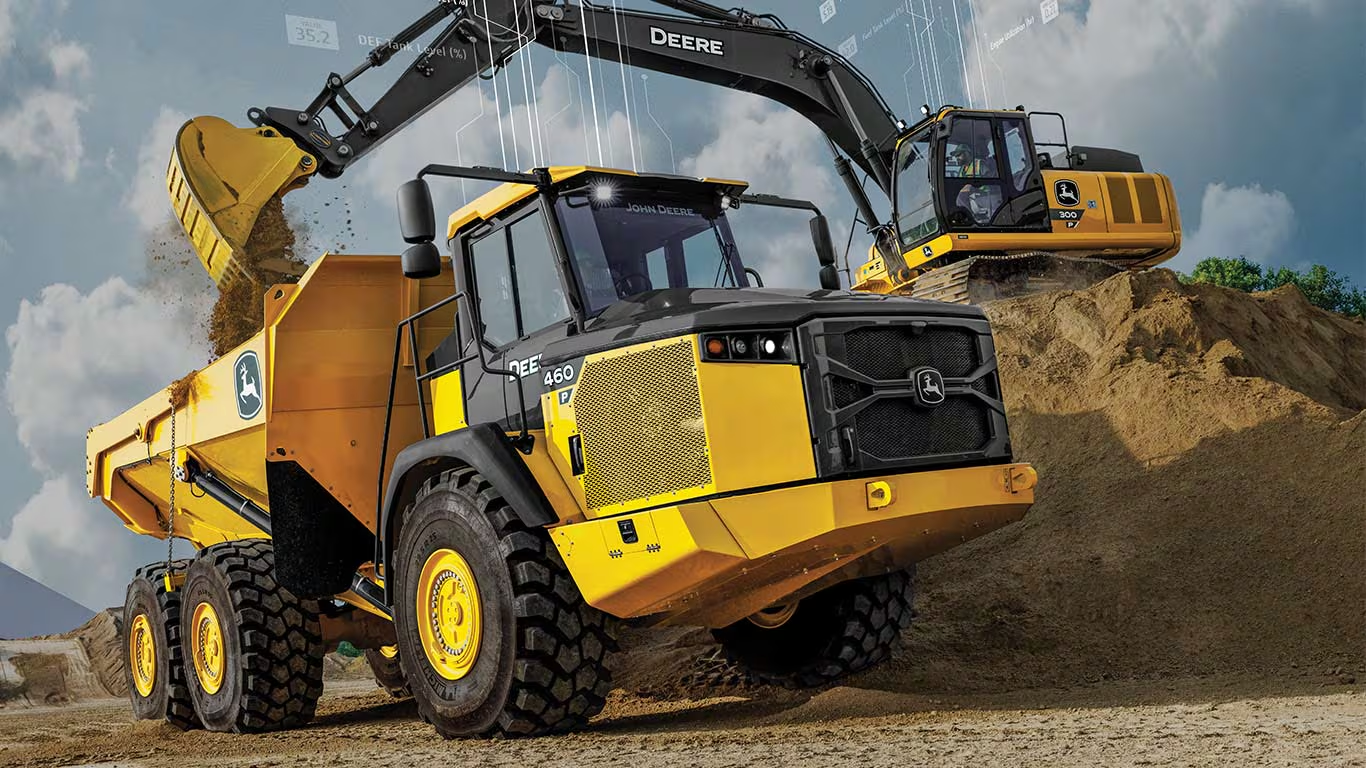
I still remember the first time I stood next to an excavator that basically told the operator where to dig without him lifting a finger to check a grade stake. No yelling across the site, no guy with a rod and a level running back and forth in the mud. Just… it knew. That was my introduction to what the industry now calls precision construction, and honestly, it changed how I think about heavy equipment entirely.
If you’ve been hearing the phrase “john deere precision construction technology” thrown around at trade shows or in dealer conversations and wondering what the fuss is about, you’re not alone. A lot of contractors I’ve talked to assume it’s just marketing fluff, another buzzword slapped on machines to justify a higher price tag. But once you actually see it running on an active site, you start to understand why so many crews are switching over.
Let’s talk about what this stuff actually does, why it matters, and whether it’s worth the investment for your operation.
So What Is This Technology, Really?
At its core, john deere precision construction technology is a collection of tools built into (or added onto) construction machines that help operators work with far more accuracy and far less guesswork. Think grade control systems, machine sensors, telematics, and safety detection all working together instead of as separate gadgets bolted onto a dozer.
It’s not one single product. It’s more like an ecosystem. You’ve got grading tools that guide blade or bucket position down to fractions of an inch, you’ve got connectivity features that let a fleet manager sitting in an office see exactly where every machine is and how it’s performing, and you’ve got detection systems that watch for people walking near a loader when the operator’s field of view is blocked.
I’ll be honest, when I first heard “precision” in the name, I pictured something overly complicated. Turns out it’s the opposite. The whole point is to strip away complication. Less manual staking, less rework, fewer surprises when the inspector shows up.
The Grading Side of Things
This is probably the piece most people think of first. Instead of an operator eyeballing a slope or constantly hopping out to check a laser level, the machine itself displays grade information right in the cab. Some setups even help control the blade automatically, adjusting on the fly as the machine moves across uneven ground.
I talked to a site foreman a while back who said his crew cut their regrading time nearly in half after switching to grade-guided dozers. Half. That’s not a small number when you’re paying for fuel, labor, and machine hours every single day a project drags on.
Why Contractors Are Actually Paying Attention Now
Construction margins are tight. Everyone knows this. Material costs bounce around, labor is hard to find, and clients want projects finished faster than ever. So when a technology promises fewer redo’s and less wasted material, people listen, even the skeptical ones.
And there’s something else too, something people don’t talk about as much: the labor shortage is forcing a shift. Fewer young workers are coming up through the trades with decades of hands-on grading experience. Precision systems help bridge that gap. A newer operator with this kind of guidance can produce results that used to take years of seat time to develop instinctively.
I’m not saying it replaces skill. It doesn’t. But it does shorten the learning curve, and on a site where you’re short-staffed, that matters a lot.
Fewer Mistakes, Less Rework
Nobody likes redoing a pad because the grade was off by two inches. It sounds small until you’re the one explaining to a client why the timeline slipped a week. Precision guidance catches those errors before they become expensive problems, not after.
The Connectivity Piece Nobody Expects
Here’s where things get interesting, and where a lot of contractors are genuinely surprised. Machines equipped with these systems can transmit data back to a dashboard that shows hours run, fuel usage, location, and even diagnostic alerts before a breakdown actually happens.
I know a fleet manager who caught a failing hydraulic component two days before it would’ve shut a machine down completely, just from a warning that popped up on his screen. Two days. That’s the difference between scheduling a repair on your own terms versus scrambling because a $300,000 machine died in the middle of a pour.
This remote monitoring side of things also means fewer service trucks driving out to a site just to run a diagnostic check. A technician can pull codes remotely in a lot of cases, which saves time and, frankly, saves everyone’s patience.
Software Updates Without the Downtime
Machines used to need a physical visit to a dealer to update onboard software. Now a lot of that happens wirelessly. It sounds like a small thing until you realize how much money is lost every hour a dozer sits idle waiting on a service appointment.
Safety Features That Actually Make a Difference
I want to talk about the safety side because I think it gets overshadowed by all the grading and efficiency talk, and it shouldn’t.
Camera-based detection systems on loaders and other heavy machines are designed to alert an operator when someone or something enters a blind spot. Anyone who’s spent time around a jobsite knows how easy it is for a ground worker to disappear from an operator’s view for just a second, and a second is all it takes.
These detection tools use a combination of cameras and basic object recognition to flag movement near the machine, then alert both the operator and, in some setups, the person nearby too. It’s not perfect. No system is. But it adds a layer of protection that just didn’t exist a decade ago.
My cousin works construction safety compliance, and she told me the number of near-miss reports involving blind-spot incidents has noticeably dropped on sites using this kind of detection tech. That’s anecdotal, sure, but it lines up with what a lot of safety officers are saying industry-wide.
Payload and Load Management
Something people underestimate is how much money gets wasted from overloading or underloading trucks. Onboard weighing systems for dump trucks and loaders let operators see exactly how much material they’re carrying in real time, right from the cab.
Overload a truck and you risk fines, tire wear, and mechanical strain. Underload it and you’re making more trips than necessary, burning fuel and time for nothing. Getting that balance right, load after load, adds up to real savings by the end of a project. It’s one of those features that doesn’t sound exciting on paper but quietly saves a contractor thousands over a season.
Is It Worth the Investment?
I get asked this a lot, and I won’t pretend there’s one answer that fits every operation. Smaller outfits doing occasional residential work might not see the same return as a paving company running multiple crews across several active sites.
But here’s the thing. The upfront cost of adding these systems, whether it’s built into a new machine or retrofitted onto an existing one, tends to pay for itself faster than people expect.
Explore more websites like:crawltheworld.net
Less rework, fewer breakdowns catching you off guard, better fuel efficiency from load management, and fewer safety incidents all stack up.
If you’re running a fleet of any real size, or if you’re bidding on projects where tight tolerances matter, it’s hard to argue against at least testing it out on one machine before committing to a full rollout.
What I’d Tell a Friend Considering It
Start small. Put it on one or two machines, the ones doing your heaviest grading work or your busiest hauling routes, and track the difference over a few months. Numbers don’t lie, and once you see the fuel savings or the reduced rework hours on paper, the decision usually makes itself.
A Quick Word on the Learning Curve
I won’t sugarcoat this part. There’s an adjustment period. Older operators who’ve been running machines a certain way for twenty years sometimes resist the new displays and controls at first. That’s normal. Change always meets a little friction, especially from people who take pride in doing things by feel.
But most crews come around within a few weeks. The systems are built to be intuitive, and once operators realize the technology isn’t replacing their judgment but supporting it, the resistance tends to fade pretty quickly.
Where This Is All Heading
Construction technology isn’t slowing down anytime soon. What started as basic grade control has grown into a much broader network of connected tools, and the direction seems to be pointing toward even more automation, better predictive maintenance, and tighter integration between machines on the same site.
I don’t think we’re far off from job sites where machines communicate with each other directly, adjusting workflows in real time without a manager having to coordinate every single move by radio. Some of that groundwork is already being laid with current telematics and connectivity features.
Whether that excites you or makes you a little uneasy probably depends on how long you’ve been in this industry. Either way, it’s coming, and contractors who get comfortable with the current generation of tools will be in a much better spot when the next wave arrives.
Final Thoughts
At the end of the day, this isn’t about chasing shiny new gadgets for the sake of it. It’s about fewer wasted hours, safer job sites, and machines that actually help the people running them instead of just sitting there as expensive metal boxes. I’ve seen enough crews make the switch and genuinely not want to go back to the old way of doing things to believe there’s real substance behind all the marketing talk.
If you’re on the fence, go watch a demo. Stand next to the machine while it works. It’s one of those things that’s hard to appreciate until you see it firsthand.
FAQs
Q: Can this technology be added to older machines, or only new ones?
A: A lot of it can be retrofitted onto existing equipment, though the exact options depend on the machine’s age and model. Newer machines usually come with more integrated systems right out of the factory, but plenty of contractors upgrade older equipment rather than buying new.
Q: Does using precision grading tools mean I need fewer surveyors on site?
A: It can reduce how often you need someone out there with a rod and level, especially for routine grading checks, but most contractors still keep surveying support for final verification and more complex layouts.
Q: How steep is the learning curve for operators who aren’t used to this kind of tech?
A: Most operators get comfortable within a few weeks. It helps to have someone experienced walk newer users through the display and controls during the first few jobs.
Q: Is the safety detection system reliable in bad weather or low light?
A: It performs reasonably well, but like most camera-based systems, visibility conditions can affect accuracy. It’s meant to be an added layer of awareness, not a total replacement for careful operating habits.
Q: Do smaller contractors actually benefit from this, or is it mainly for large fleets?
A: Smaller contractors can absolutely benefit, especially if they’re doing precision grading work or running machines on tight schedules. The return on investment might just take a little longer to show compared to a large fleet running dozens of machines.
Get More Latest Updates on crawltheworld
