
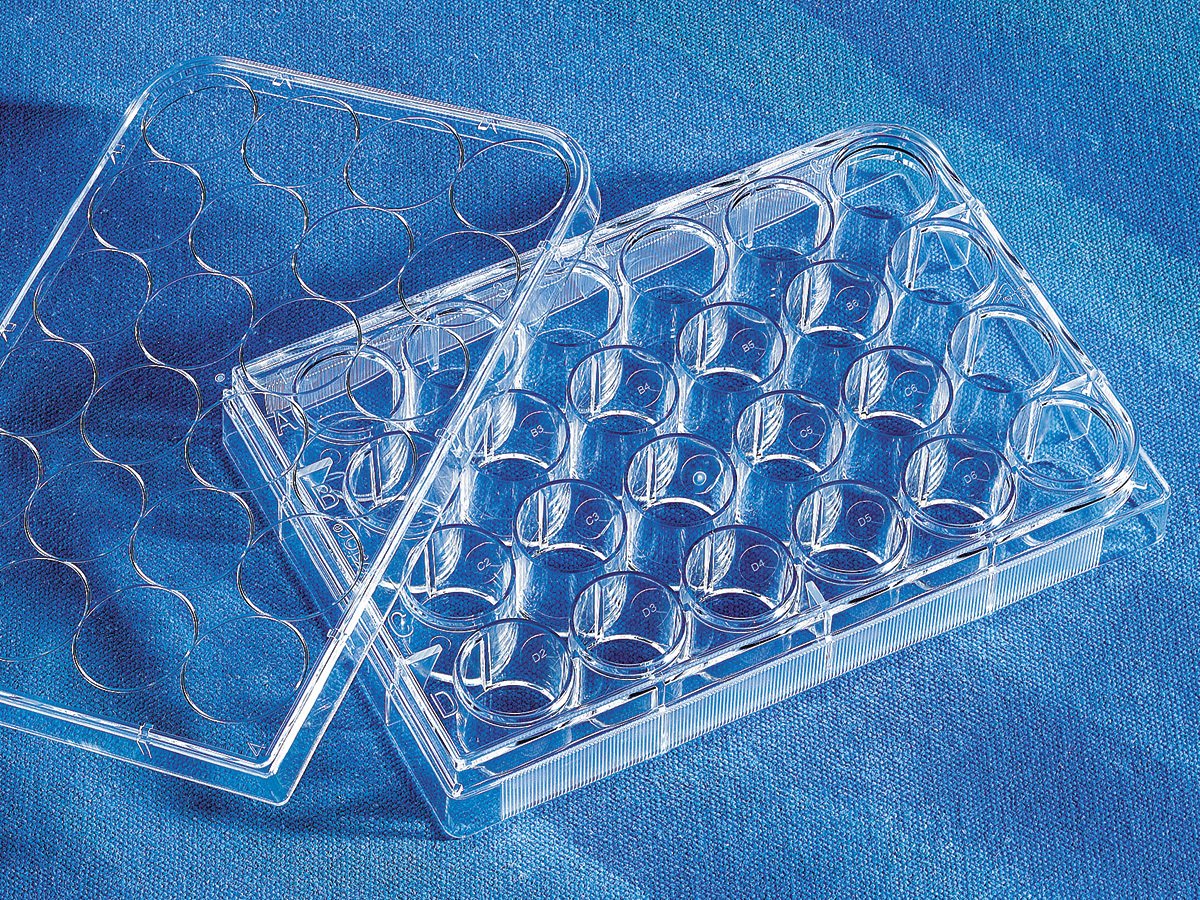
Laboratory equipment often evolves with advances in science, yet some tools continue to prove their value decade after decade. One example is the 24 well plate, a simple-looking piece of laboratory plasticware that plays a significant role in biological, pharmaceutical, and medical research. Despite its straightforward design, it has become an essential part of countless experiments involving cell culture, microbiology, tissue engineering, drug screening, and molecular biology.
Researchers frequently search for this laboratory consumable because they want to understand its applications, compare it with other culture plates, or determine whether it suits a particular experiment. Students entering research laboratories are often introduced to multiwell plates during their first practical sessions, while experienced scientists continue relying on them because they provide a practical balance between sample capacity and ease of handling.
Although new laboratory technologies continue to emerge, this format remains relevant because it offers flexibility without unnecessary complexity. Understanding why it has become such a widely accepted standard helps explain its continued importance in modern scientific research.
A Quick Answer for Researchers
What is a 24-well plate?
A multiwell culture plate with twenty-four individual wells designed for laboratory experiments involving cell culture, microbiology, chemical testing, sample preparation, and biological assays. Each well functions as a separate reaction chamber, allowing multiple experiments or replicates to be performed simultaneously while reducing contamination risks and improving workflow efficiency.
Its popularity comes from offering enough working volume for many laboratory procedures without requiring the larger footprint of flasks or dishes.
Why Scientists Continue Choosing This Format
Laboratories handle hundreds or even thousands of samples over the course of a research project. Efficiency matters just as much as accuracy.
One reason this plate format remains popular is that it offers an excellent compromise between space and capacity. Researchers can perform multiple experimental conditions at once while maintaining enough liquid volume for reliable observations.
Smaller formats may limit working volume, whereas much larger vessels consume additional reagents, media, and laboratory space.
That balance explains why many protocols continue recommending this particular configuration.
More Than Just Plastic
At first glance, laboratory plates appear almost identical.
In practice, however, manufacturing quality makes a noticeable difference.
High-quality laboratory plates are produced using medical- or laboratory-grade polymers under carefully controlled conditions. Uniform well dimensions, optical clarity, smooth surfaces, and sterile packaging all contribute to consistent experimental performance.
Small manufacturing inconsistencies may seem insignificant, yet they can influence experimental reproducibility over time.
Researchers working with sensitive cell lines quickly learn that dependable laboratory consumables often save far more time than they cost.
The Role It Plays in Modern Research
This laboratory tool appears across an impressive range of scientific disciplines.
Cell biology laboratories use it for growing mammalian and stem cells.
Microbiology researchers culture bacteria, fungi, and microorganisms under controlled conditions.
Pharmaceutical companies employ similar plates during early drug screening.
Universities rely on them for teaching practical laboratory techniques.
Biotechnology companies integrate them into assay development and quality-control workflows.
The remarkable versatility explains why the design has remained largely unchanged for years despite rapid technological progress elsewhere.
Why Beginners Appreciate It
Students entering research laboratories often find large-scale experiments intimidating.
Working with individual wells creates a more manageable learning experience.
Instead of preparing numerous separate containers, learners can organize several experimental groups on one plate while clearly labeling treatments and controls.
That organization reduces confusion and encourages careful experimental planning.
Many instructors also appreciate how the format supports discussions about replication, experimental controls, and statistical reliability.
What Makes It Different From Other Laboratory Containers
Laboratories use flasks, culture dishes, centrifuge tubes, Petri dishes, and many specialized containers.
Each serves a different purpose.
Culture flasks provide larger growth surfaces for expanding cell populations.
Petri dishes remain ideal for certain microbiological applications.
Microcentrifuge tubes support sample storage and molecular biology workflows.
Multiwell plates occupy a unique position by allowing multiple independent experimental environments within one compact platform.
This makes comparison between treatments significantly more convenient.
The Details Many New Users Miss
Successful experiments depend on much more than selecting the correct equipment.
Experienced researchers pay close attention to several practical details before beginning work.
Surface treatment influences cell attachment.
Sterility affects contamination risk.
Lid design helps reduce evaporation.
Material transparency supports microscopic observation.
Compatibility with automated laboratory instruments can also become important in larger research facilities.
These considerations may seem minor initially, but they often determine whether experiments proceed smoothly.
Practical Advantages That Become Clear Over Time
Researchers who regularly perform biological assays often notice several practical improvements when using standardized multiwell formats.
- Multiple experimental groups remain organized on one platform.
- Reagent consumption is lower compared with larger culture vessels.
- Laboratory incubators accommodate many plates efficiently.
- Replicate experiments become easier to manage.
- Sample identification remains straightforward through well labeling.
- Microscopic examination requires minimal sample transfer.
These advantages explain why the format appears in research publications across numerous scientific disciplines.
Where Laboratory Work Becomes More Challenging
Despite its usefulness, no laboratory tool is perfect.
Evaporation may affect outer wells during lengthy incubation if environmental conditions are not carefully controlled.
Cross-contamination becomes possible when aseptic technique is neglected.
Inaccurate pipetting can introduce unwanted experimental variation.
Researchers also need to consider appropriate working volumes because overfilling or underfilling wells may influence results.
Fortunately, these challenges are well understood, and standard laboratory practices help minimize most of them.
Why Sterility Deserves Serious Attention
One contaminated sample can compromise an entire experiment.
For that reason, sterile technique remains one of the most important aspects of laboratory work.
Researchers typically handle culture plates inside biological safety cabinets or laminar airflow hoods while wearing appropriate personal protective equipment.
Even experienced scientists occasionally encounter contamination despite careful technique. Dust particles, airborne microorganisms, or improperly sterilized instruments can introduce unwanted variables.
Maintaining good laboratory habits remains the most reliable safeguard against these problems.
The Growing Role in Medical Research
Medical science increasingly depends on laboratory models before treatments reach clinical testing.
Researchers investigating cancer biology, infectious diseases, regenerative medicine, immunology, and pharmacology frequently rely on multiwell culture systems during early experimental stages.
These platforms allow scientists to evaluate cellular responses under carefully controlled conditions before progressing toward more advanced models.
Although they cannot fully replicate the complexity of living organisms, they provide valuable preliminary information that guides future research.
Why Standardization Matters More Than Many People Realize
Scientific progress depends heavily on reproducibility.
When laboratories around the world use standardized equipment, researchers can compare results more effectively.
That consistency becomes especially important during collaborative studies involving multiple institutions.
Standard dimensions also ensure compatibility with incubators, microscopes, robotic liquid handlers, and analytical instruments used throughout modern research laboratories.
Without this level of standardization, experimental workflows would become considerably more complicated.
A Quick Answer for Students
Who commonly uses this laboratory equipment?
The format is widely used by university students, academic researchers, biotechnology companies, pharmaceutical laboratories, hospital research centers, diagnostic developers, and industrial scientists conducting biological or chemical experiments that require multiple parallel samples.
Why Researchers Rarely Rely on a Single Size
One question that often comes up is whether this format is always the best choice. The answer depends on the experiment.
Some studies require larger culture areas because cells need more room to grow. In those situations, flasks or larger culture dishes are more suitable. Other experiments involve very small sample volumes, making higher-density microplates a better option.
This is why laboratories usually stock several types of culture vessels rather than depending on one design alone. Experienced researchers select equipment based on experimental objectives instead of personal preference.
Interestingly, many laboratories begin optimization studies with a 24 well plate before scaling experiments up or down. That flexibility makes it a practical starting point for a wide variety of biological investigations.
The Questions That Often Come Up Before Buying
Choosing laboratory consumables isn’t only about price.
Researchers usually consider several practical factors before placing an order.
Brand reputation often matters because consistent manufacturing reduces unexpected variability.
Surface treatment is another important consideration. Some applications require treated surfaces that promote cell attachment, while suspension cultures may perform better on untreated materials.
Packaging also deserves attention. Individually wrapped sterile plates reduce contamination risk, particularly in laboratories handling sensitive biological samples.
Finally, compatibility with existing laboratory instruments should never be overlooked. A product that fits smoothly into incubators, microscopes, and automated systems simplifies everyday workflows.
Safety Is About More Than the Equipment
Although the plate itself presents very little physical hazard, safety depends on what is placed inside it.
Research involving microorganisms, human cells, chemicals, or biological materials should always follow institutional biosafety guidelines.
Proper disposal is equally important. Disposable laboratory plastics that have come into contact with hazardous materials should never be discarded with ordinary waste. Instead, they must be handled according to laboratory safety protocols, which may include autoclaving or disposal through approved biomedical waste systems.
Good documentation is another essential safety practice. Clear labeling helps prevent sample mix-ups and reduces the likelihood of accidental errors during long experiments.
Why Reviews Tend to Be Positive
When researchers discuss laboratory consumables, they rarely focus on appearance. Reliability is what earns positive feedback.
Reviews often highlight consistent well dimensions, leak-resistant construction, optical clarity for microscopy, and dependable sterility. These characteristics may sound basic, but they have a direct impact on experimental quality.
Negative reviews, on the other hand, usually involve manufacturing defects, inconsistent molding, poorly fitting lids, or packaging problems that compromise sterility. Even small defects can interrupt weeks of laboratory work, which explains why experienced researchers often remain loyal to trusted manufacturers.
Does New Technology Make It Obsolete?
Scientific research changes rapidly, and laboratories now use sophisticated automated systems, high-throughput screening platforms, and advanced imaging technologies.
Even so, this traditional format has not disappeared.
In fact, many modern instruments are designed specifically to accommodate standardized multiwell plates. Automation has increased their usefulness rather than replacing them.
Researchers still need dependable vessels for culturing cells, preparing samples, and performing assays before advanced analysis begins. As long as those needs exist, standardized culture plates are likely to remain part of laboratory workflows.
Practical Value Beyond Basic Cell Culture
Although cell biology is one of the most common applications, these plates support many other laboratory activities.
Scientists use them to test antimicrobial compounds, evaluate biomaterials, study tissue responses, measure enzyme activity, observe microbial growth, and develop diagnostic methods.
Their versatility explains why they appear in laboratories with very different research goals. A microbiologist, an immunologist, and a pharmaceutical scientist may all use the same plate format while conducting completely different experiments.
That adaptability is one of its greatest strengths.
Why Careful Technique Still Matters
Even the highest-quality laboratory consumables cannot compensate for poor experimental practice.
Accurate pipetting, proper incubation conditions, sterile handling, and consistent record-keeping remain essential.
Many laboratory mistakes are surprisingly ordinary. A mislabeled sample, an incorrect reagent volume, or inconsistent timing can influence results far more than the choice of plate itself.
Experienced researchers often emphasize that reliable science comes from careful methods rather than expensive equipment alone.
Looking Ahead
Research laboratories continue to evolve with advances in biotechnology, artificial intelligence, automation, and personalized medicine.
Yet fundamental laboratory tools remain surprisingly stable.
As scientists investigate new therapies, infectious diseases, regenerative medicine, and molecular diagnostics, dependable multiwell culture systems continue supporting the early stages of discovery.
Future versions may incorporate smarter materials or improved manufacturing techniques, but the underlying concept has already proven its long-term value.
That longevity speaks to the effectiveness of a design that successfully balances simplicity with functionality.
Conclusion
The 24 well plate has earned its place as one of the most widely used laboratory consumables because it combines practicality, consistency, and versatility. It supports research across cell biology, microbiology, biotechnology, pharmaceutical development, and many other scientific disciplines while helping researchers organize multiple experimental conditions in a compact format.
Although it is not suitable for every application, its balanced design continues to meet the needs of both beginners and experienced scientists. When used with proper sterile technique, accurate experimental planning, and high-quality laboratory practices, it remains a dependable tool for generating reliable scientific data. In a field where precision is everything, that reliability is exactly why it continues to be trusted today.
FAQs
Q: What is a 24-well plate mainly used for?
A: It is commonly used for cell culture, microbiology, drug screening, biological assays, tissue engineering, and various laboratory experiments that require multiple independent samples.
Q: Is it reusable?
A: Most laboratory plates are designed for single-use applications to maintain sterility and reduce contamination. Some specialized versions may be reusable under specific laboratory protocols.
Q: Why do researchers choose this format instead of larger culture vessels?
A: It offers a practical balance between working volume, sample organization, reagent efficiency, and ease of handling, making it suitable for many experimental workflows.
Q: Can it be used in automated laboratory systems?
A: Yes. Many standardized multiwell plates are compatible with robotic liquid handlers, automated imaging systems, incubators, and plate readers used in modern research laboratories.
Q: What materials are commonly used to manufacture these plates?
A: Most are made from high-quality polystyrene, although polypropylene and other laboratory-grade polymers are also available for specific applications.
Q: Is this laboratory equipment still relevant today?
A: Absolutely. Despite advances in laboratory technology, standardized multiwell plates remain an essential part of biomedical research, biotechnology, pharmaceutical development, and academic laboratories worldwide.
Visit here for more information : crawltheworld
