
I used to think my cutting board was the problem. Tomatoes were getting crushed instead of sliced, onions took way more effort than they should, and even simple meal prep felt frustrating. Then someone handed me a properly sharpened knife. The difference was immediate.
A sharp knife isn’t just about making cooking easier—it can actually be safer because you don’t have to force the blade through food. If you’ve been wondering how to sharpen kitchen knives, the process is much simpler than it sounds. A little practice goes a long way, and your knives will thank you for it.
Why Sharp Knives Matter
Many people assume dull knives are safer because they aren’t as sharp. Oddly enough, the opposite is often true.
A dull blade requires extra pressure, making it more likely to slip while cutting. A well-maintained edge glides through food with better control and less effort.
Sharp knives also:
- Produce cleaner cuts
- Help preserve food texture
- Reduce hand fatigue
- Make meal preparation faster
- Extend the life of the knife
Signs Your Knife Needs Sharpening
Not sure if it’s time to sharpen your knife? A few simple clues usually make it obvious.
Look for these signs:
- Tomatoes squash before they slice.
- The blade struggles to cut paper.
- You need extra force to chop vegetables.
- The knife slips off smooth foods.
- Cuts become uneven and rough.
If you’ve noticed any of these, it’s probably time for some maintenance.
Tools You Can Use
There isn’t just one way to sharpen a knife. Each method has its own advantages.
Whetstone
Many chefs prefer a whetstone because it offers excellent control and creates a very sharp edge.
It takes a little practice, but the results are worth it.
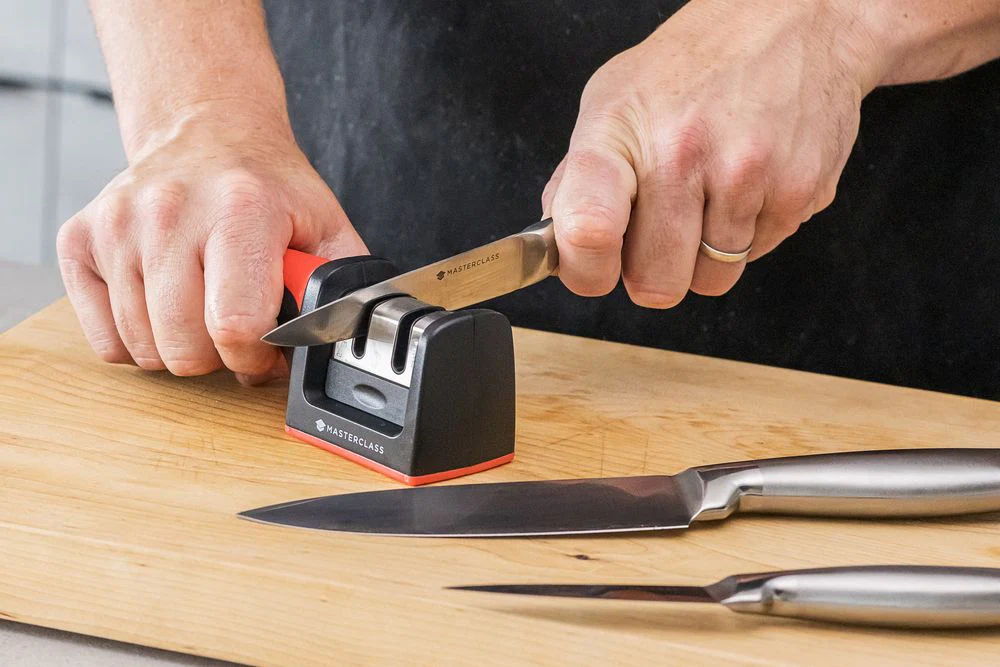
Manual Knife Sharpener
A pull-through sharpener is quick and beginner-friendly. It’s a practical choice for everyday kitchen use.
Electric Sharpener
Electric models save time and maintain a consistent angle, making them convenient for busy households.
Honing Rod
A honing rod doesn’t actually sharpen the blade. Instead, it straightens the edge between sharpening sessions, helping your knife perform better for longer.
How to Sharpen Kitchen Knives Step by Step
If you’re learning how to sharpen kitchen knives, start with a whetstone or a quality manual sharpener.
Step 1: Prepare the Stone
Some whetstones need to soak in water for several minutes before use. Always check the manufacturer’s instructions.
Step 2: Find the Correct Angle
Most kitchen knives perform well at an angle of about 15 to 20 degrees.
Keeping the angle consistent matters more than making it perfect.
Step 3: Glide the Blade
Move the knife across the stone in smooth strokes, working from the heel to the tip.
Repeat the same number of strokes on each side.
Step 4: Test the Edge
Try slicing a sheet of paper or a ripe tomato.
If the knife cuts cleanly without much effort, you’ve done a good job.
Common Mistakes to Avoid
When I first tried sharpening a knife, I rushed through it. The edge ended up uneven, and I had to start over.
A few mistakes are surprisingly common:
- Using too much pressure
- Changing the sharpening angle
- Skipping one side of the blade
- Forgetting to clean the knife afterward
- Waiting until the knife becomes extremely dull
Small, consistent maintenance is much easier than restoring a neglected blade.
How Often Should You Sharpen a Knife?
It depends on how often you cook.
For most home kitchens:
- Hone the blade every few uses.
- Sharpen every few months.
- Heavy daily use may require more frequent sharpening.
Keeping up with regular maintenance means you’ll spend less time sharpening overall.
Caring for Your Knives
A sharp knife stays sharp longer with proper care.
Good habits include:
- Hand washing instead of using the dishwasher
- Drying immediately after cleaning
- Using wooden or plastic cutting boards
- Storing knives in a knife block or magnetic strip
- Avoiding glass or stone cutting surfaces
These simple habits protect the blade and extend its lifespan.
Is Professional Sharpening Worth It?
Sometimes, yes.
If you own expensive chef’s knives or notice chips in the blade, professional sharpening can restore the edge more effectively than many home tools.
For everyday maintenance, though, learning the basics yourself is both practical and satisfying.
Conclusion
Knowing how to sharpen kitchen knives is one of those kitchen skills that pays off every single time you cook. A sharp blade makes meal preparation smoother, safer, and far more enjoyable. With the right tools and a little patience, you can keep your knives performing like new without replacing them. Once you experience the difference, it’s hard to imagine going back to a dull blade.
Frequently Asked Questions
How often should I sharpen my kitchen knives?
Most home cooks sharpen their knives every three to six months, depending on use.
What’s the difference between sharpening and honing?
Sharpening removes a small amount of metal to create a new edge, while honing straightens the existing edge.
Can beginners use a whetstone?
Yes. It takes a little practice, but many beginners learn quickly with patience.
Is an electric knife sharpener safe?
Yes, when used according to the manufacturer’s instructions.
What’s the easiest way to sharpen kitchen knives?
A quality manual pull-through sharpener is one of the easiest options for beginners.
For more details : crawltheworld
