
Have you ever noticed how some people seem to know exactly what they want to do from a young age? Then there are the rest of us—exploring different options, asking questions, and wondering which career will actually feel meaningful years from now.
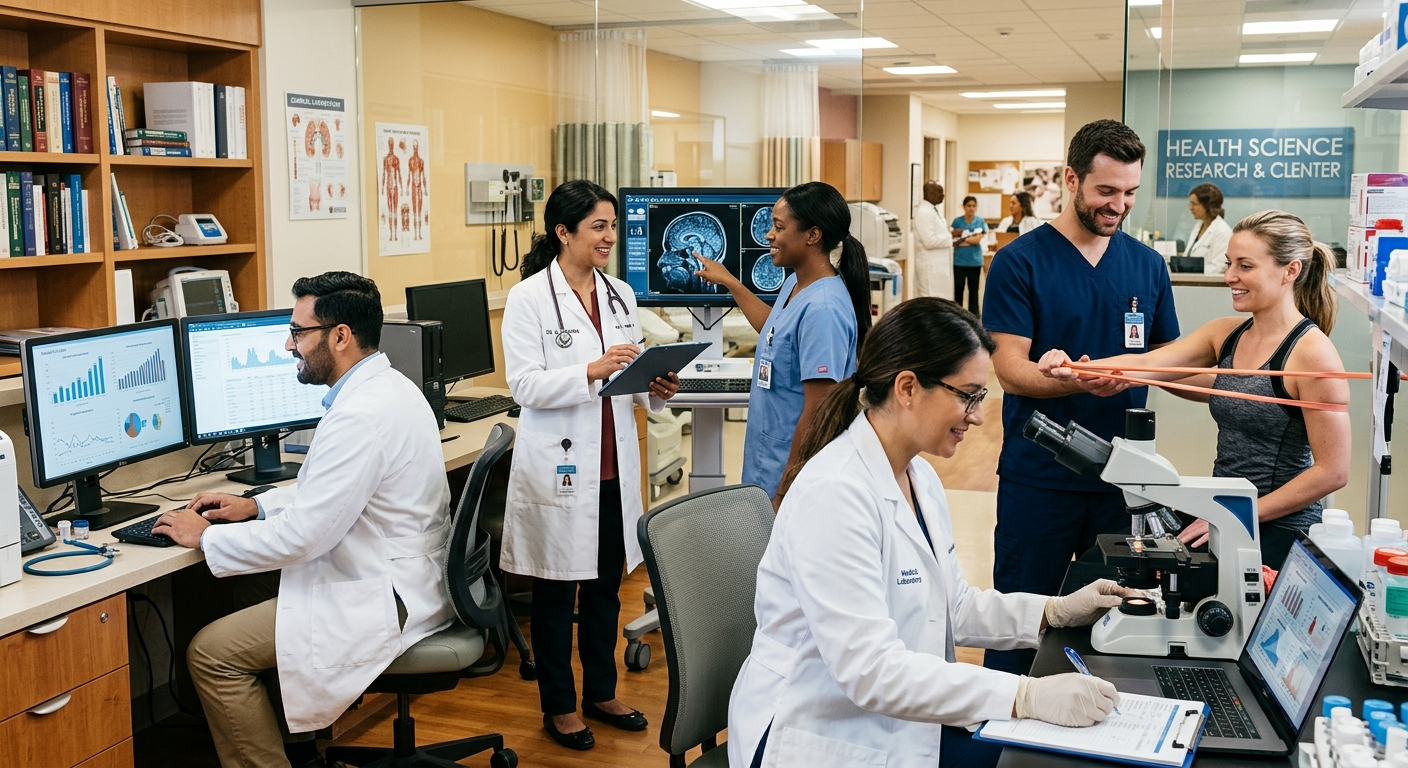
Healthcare often comes up during that search. It isn’t just about becoming a doctor or a nurse anymore. The industry has grown in ways many people don’t realize, creating opportunities for people with different skills, personalities, and educational backgrounds. Whether you enjoy science, technology, communication, or solving problems, there’s likely a place where you can fit in.
That’s one of the reasons health science careers continue to attract students and professionals alike. They offer stability, purpose, and the chance to improve people’s lives in ways that matter.
Why So Many People Choose Healthcare
A friend of mine once switched careers after spending years in retail management. She wasn’t looking for prestige. She simply wanted work that felt more rewarding at the end of each day. After completing a medical laboratory program, she found exactly that.
Stories like hers aren’t unusual.
Healthcare offers something many industries can’t promise—a consistent need for skilled professionals. People will always need medical care, rehabilitation, preventive services, and health education regardless of economic conditions.
Some of the biggest reasons people enter healthcare include:
- Long-term job stability
- Competitive salaries
- Opportunities for career advancement
- Flexible work environments
- The satisfaction of helping others
Of course, every job comes with challenges. Healthcare can be demanding, emotionally exhausting, and sometimes unpredictable. Yet many professionals say the rewards outweigh the difficult moments.
What Are Health Science Careers?
Simply put, health science careers include occupations that support human health through prevention, diagnosis, treatment, research, rehabilitation, education, and technology.
While physicians often receive the spotlight, they represent only one piece of a much larger healthcare system.
Professionals work behind the scenes, inside laboratories, operating rooms, pharmacies, rehabilitation centers, public health agencies, universities, and even software companies developing medical technology.
The field is surprisingly diverse.
Popular Career Paths
Registered Nurse
Nurses are often the people patients remember most. They monitor recovery, educate families, administer medications, and provide emotional support during difficult times.
Many nurses later specialize in areas such as:
- Emergency care
- Pediatrics
- Intensive care
- Oncology
- Cardiology
Every day looks a little different, which keeps the job interesting.
Medical Laboratory Scientist
Not every healthcare worker interacts directly with patients.
Laboratory scientists analyze blood, tissue, and other samples that help physicians diagnose illnesses accurately. Their work plays a huge role in treatment decisions, even if patients never meet them.
If you enjoy biology and solving puzzles, this career can be incredibly satisfying.
Physical Therapist
Helping someone walk again after surgery or recover from a sports injury is deeply rewarding.
Physical therapists create personalized rehabilitation plans, guide patients through exercises, and celebrate every milestone—sometimes even the smallest improvements become huge victories.
Radiologic Technologist
Modern medicine depends heavily on medical imaging.
Radiologic technologists operate equipment like X-ray, CT, and MRI machines while ensuring patient comfort and safety throughout the imaging process.
Technology lovers often enjoy this profession because equipment continues evolving.
Occupational Therapist
Occupational therapists help people regain independence after illness, accidents, or disabilities.
Sometimes that means teaching a child fine motor skills. Other times it’s helping an older adult safely return home after surgery.
No two patients have identical needs.
Pharmacist
Pharmacists do much more than fill prescriptions.
They review medications, identify possible drug interactions, counsel patients, and work closely with physicians to improve treatment outcomes.
Attention to detail is absolutely essential in this role.
Public Health Specialist
Rather than focusing on one patient at a time, public health professionals work to improve the well-being of entire communities.
Their responsibilities may include:
- Disease prevention
- Health education
- Community outreach
- Nutrition programs
- Emergency preparedness
Their efforts often prevent health problems before they even begin.
Careers That Don’t Require Medical School
Many people assume healthcare means spending a decade in university.
That’s simply not true.
Several respected professions require shorter educational pathways, including:
| Career | Typical Education |
|---|---|
| Dental Hygienist | Associate Degree |
| Respiratory Therapist | Associate Degree |
| Medical Sonographer | Associate Degree |
| Surgical Technologist | Certificate or Associate Degree |
| Pharmacy Technician | Certificate |
| Medical Assistant | Diploma or Certificate |
These careers allow individuals to enter the workforce relatively quickly while still earning competitive salaries.
Skills That Matter Most
Technical knowledge is only part of the picture.
Healthcare professionals rely on personal qualities every single day.
Communication
Patients often feel anxious.
Explaining procedures clearly and listening carefully can make a stressful experience much easier.
Critical Thinking
Healthcare rarely follows a perfect script.
Professionals must evaluate information, recognize patterns, and make sound decisions under pressure.
Compassion
Knowledge helps people recover.
Kindness helps them cope.
Even small gestures—a smile or a reassuring conversation—can leave lasting impressions.
Adaptability
Medicine changes constantly.
New treatments, technologies, and research require continuous learning throughout a person’s career.
Those who enjoy lifelong learning often thrive in healthcare.
Educational Paths to Consider
Different careers require different levels of education.
Common options include:
Certificate Programs
Usually completed within one year.
Ideal for entry-level positions like:
- Medical assistant
- Pharmacy technician
- Phlebotomy technician
Associate Degrees
Typically require two years.
Suitable for careers such as:
- Respiratory therapist
- Dental hygienist
- Radiologic technologist
Bachelor’s Degrees
Four-year programs prepare students for careers in:
- Public health
- Health administration
- Medical laboratory science
- Nutrition
Graduate Degrees
Advanced roles often require master’s or doctoral education.
Examples include:
- Physician assistant
- Physical therapist
- Pharmacist
- Occupational therapist
- Nurse practitioner
Workplace Options
One thing I genuinely appreciate about healthcare is the variety.
Not everyone dreams of working inside a busy hospital.
Fortunately, plenty of alternatives exist.
Healthcare professionals may work in:
- Hospitals
- Private clinics
- Schools
- Universities
- Research laboratories
- Government agencies
- Rehabilitation centers
- Home healthcare services
- Pharmaceutical companies
- Corporate wellness programs
Changing environments during your career is completely possible.
Technology Is Changing Everything
Healthcare looks very different than it did even ten years ago.
Electronic health records have replaced mountains of paperwork.
Artificial intelligence helps identify patterns in medical images.
Telemedicine allows patients to consult doctors from home.
Wearable devices continuously monitor heart rate, sleep quality, and physical activity.
These innovations aren’t replacing healthcare workers—they’re helping professionals make faster, better-informed decisions.
People who enjoy technology often find exciting opportunities in digital healthcare.
Is Healthcare the Right Choice for You?
It’s worth asking yourself a few honest questions.
Do you enjoy helping people?
Can you stay calm under pressure?
Are you willing to continue learning throughout your career?
Do you appreciate meaningful work more than routine tasks?
If you answered yes to most of these, healthcare may be worth exploring.
No career is perfect, though.
Some shifts are long.
Certain situations can be emotionally difficult.
Patients don’t always recover the way everyone hopes.
Yet many professionals continue choosing healthcare because the positive moments stay with them far longer than the hard days.
Also Explore Our Guide On This: Looks Different After Weight Loss
Career Growth and Future Outlook
The healthcare industry continues expanding as populations grow older and medical technology advances.
Demand exists across clinical care, research, mental health, rehabilitation, diagnostics, administration, and preventive medicine.
That means professionals who invest in education and develop strong communication skills often discover new opportunities throughout their careers.
Many workers also advance into leadership, education, consulting, or specialized clinical roles after gaining experience.
Final Thoughts
Choosing a profession isn’t only about earning a paycheck. It’s about finding work that gives your time meaning.
For many people, health science careers provide that balance between personal fulfillment and professional growth. Whether you’re interested in working directly with patients, researching diseases, managing healthcare systems, or operating advanced medical equipment, there’s a path that matches your strengths.
Take time to explore different specialties, speak with professionals, and learn what daily life actually looks like. A little research today could lead you toward a career that stays rewarding for decades.
ional therapy, physician assistants, and health information management continue to see strong demand.
What skills are important for success in healthcare?
Communication, empathy, critical thinking, teamwork, adaptability, attention to detail, and problem-solving are valuable in nearly every healthcare profession.
Conclusion
A career in healthcare isn’t just about treating illnesses—it’s about making a real difference in people’s lives every day. With so many paths to choose from, there’s room for different interests, skills, and goals. Whether you’re drawn to patient care, medical technology, research, or public health, health science careers offer long-term opportunities to learn, grow, and build a rewarding future. Taking the time to explore your options today could lead you to a profession that stays meaningful for years to come.
FAQs
Q1: What are health science careers?
They are jobs focused on improving health through patient care, research, diagnostics, and public health.
Q2: Do I need to become a doctor?
No. Many careers, like nursing, laboratory science, and radiology, don’t require medical school.
Q3: Which health science careers are in demand?
Nursing, physical therapy, medical laboratory science, and respiratory therapy are growing fields.
Q4: What skills are important?
Communication, empathy, problem-solving, teamwork, and attention to detail.
Q5: Are health science careers a good choice?
Yes, they often provide job security, career growth, and meaningful work.
For more details : crawltheworld
